A temporary interstellar laboratory

A day at the Interstellar Institue

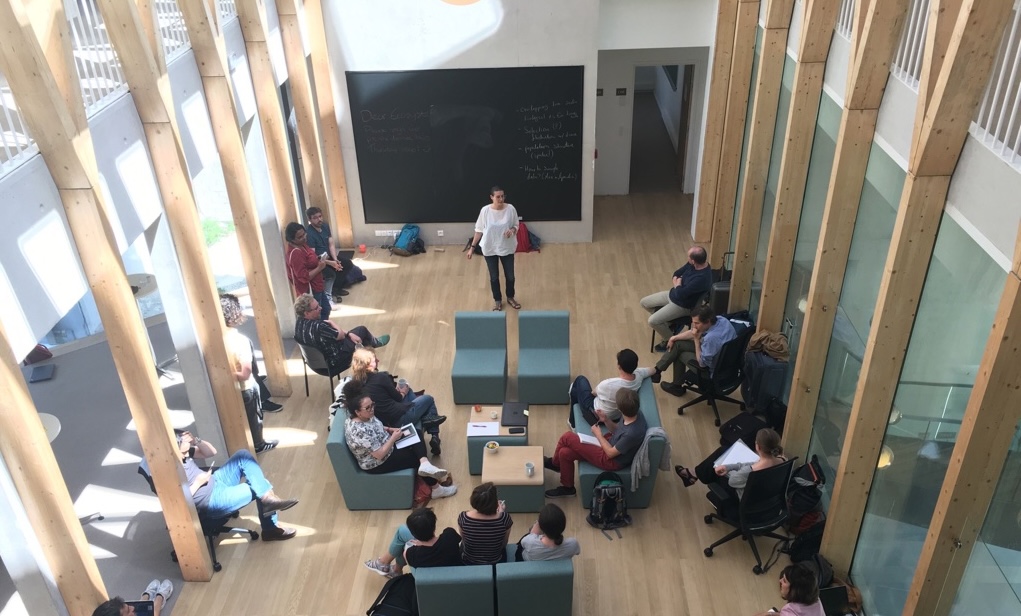
On any given day, about 50-55 participants are present at the Institut Pascal. It is a temporary interstellar lab for three weeks. Each day starts in the main amphitheatre with four 15min talks from participants - anyone can give a talk if they want - followed by enough time for discussion. We then plan the rest of the day together; everyone is welcome to propose discussion topics to be held later in one of the meeting rooms / common area / amphitheatres. The afternoons are free, this time is yours to work, discuss, imagine, explore... you can work alone, with colleagues or new collaborators, take part in optional group discussions. Imagine a lab where the person that can answer your new question is probably down the hall. This free time is when the magic happens !

A place and time to reflect

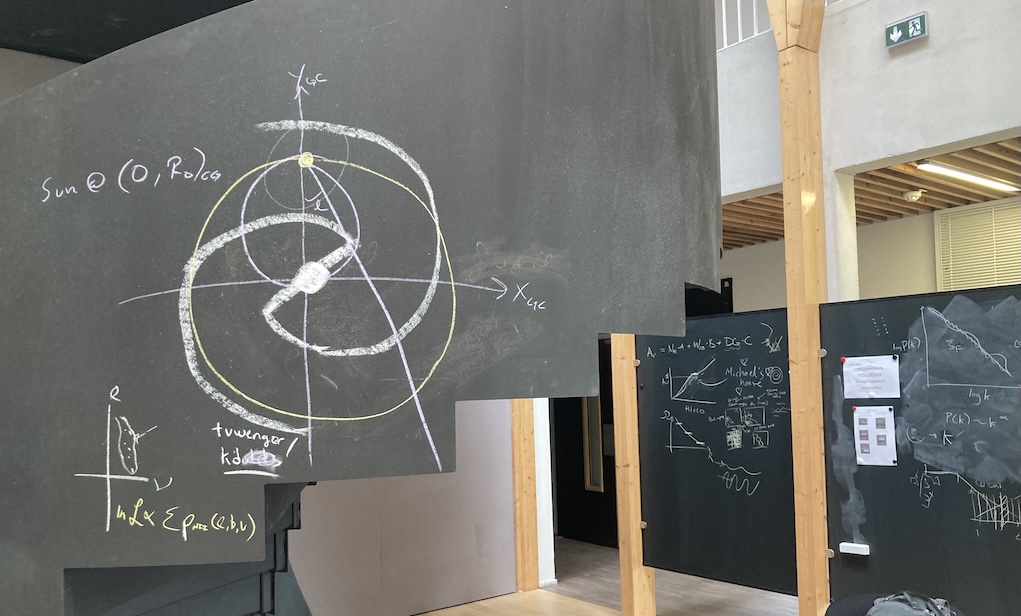
The Interstellar Institute meetings are designed to provide a time for synthesis, make an inventory of recent studies, discuss new data analysis techniques, to lay out big pictures, test new ideas and identify key questions, clarifying what should be addressed next. For that purpose, i2 meetings bring together experts in anything interstellar (gas, dust, cosmic rays, magnetic field, turbulence, star formation, feedback, ...) with a focus on reaching a balance between multi-wavelength observations, numerical simulations / theory, and data analysis, but also a balance of experience levels, from PhD students to more senior scientists.

With 60 desks, plenty of common areas and meeting rooms, the Institut Pascal has been designed for this type of collaborative work. It is located on the Paris-Saclay University campus, easily reached by public transports.

Registration

Important dates

  • March 1st, 2026 : registration opens
  • April 30, 2026 : registration closes
  • May 15, 2026 : announcement of selection
  • May 15 - June 30, 2026 : abstract submission for talk
  • July 15, 2026 : publication of the program
  • September 21, 2026 : start of ii8
  • October 9, 2026 : end of ii8

Scientific Organising Committee

  • Susan Clark | Stanford University, USA
  • Joanne Dawson | Macquarie University, Australia
  • Naomi McClure-Griffiths | Australian National University, Australia
  • Marc-Antoine Miville-Deschênes | Ecole Normale Supérieure, Paris, France