Rise to the ISM big data challenge
All disciplines must wrangle with the modern flood of data coming from advanced numerical simulation and observations. The challenge in interstellar medium is unique and acute for two reasons. The first is that our simulation and observational data is largely irreducible – it is not a list of galaxies in neat rows and columns, but enormous fields of images and data cubes, full of very complex, overlapping structures of unknown provenance that cannot be neatly isolated, counted, and listed. Secondly, nearly every observation of sources beyond the solar system is an observation through the interstellar medium: either reddening caused by dust, absorption caused by interstellar ions, and emission from the dusty interstellar medium itself impact nearly all observations. Thus, essentially every astronomical data set can be brought to bear on the study of the interstellar medium. The techniques for harnessing these data, both incredibly large and incredibly broad, are simply inaccessible to any one group, and each data set only tells a small piece of the ISM story. Only by synthesising these data together, using, observational, data science, computational and statistical techniques, can we hope to harness the full power of these data. By bringing together world experts in these data rich regimes for extended interactions, we will find these interfaces, develop new tools, and exploit them for breakthrough understanding of this rich and complex space.
Connect the Scales
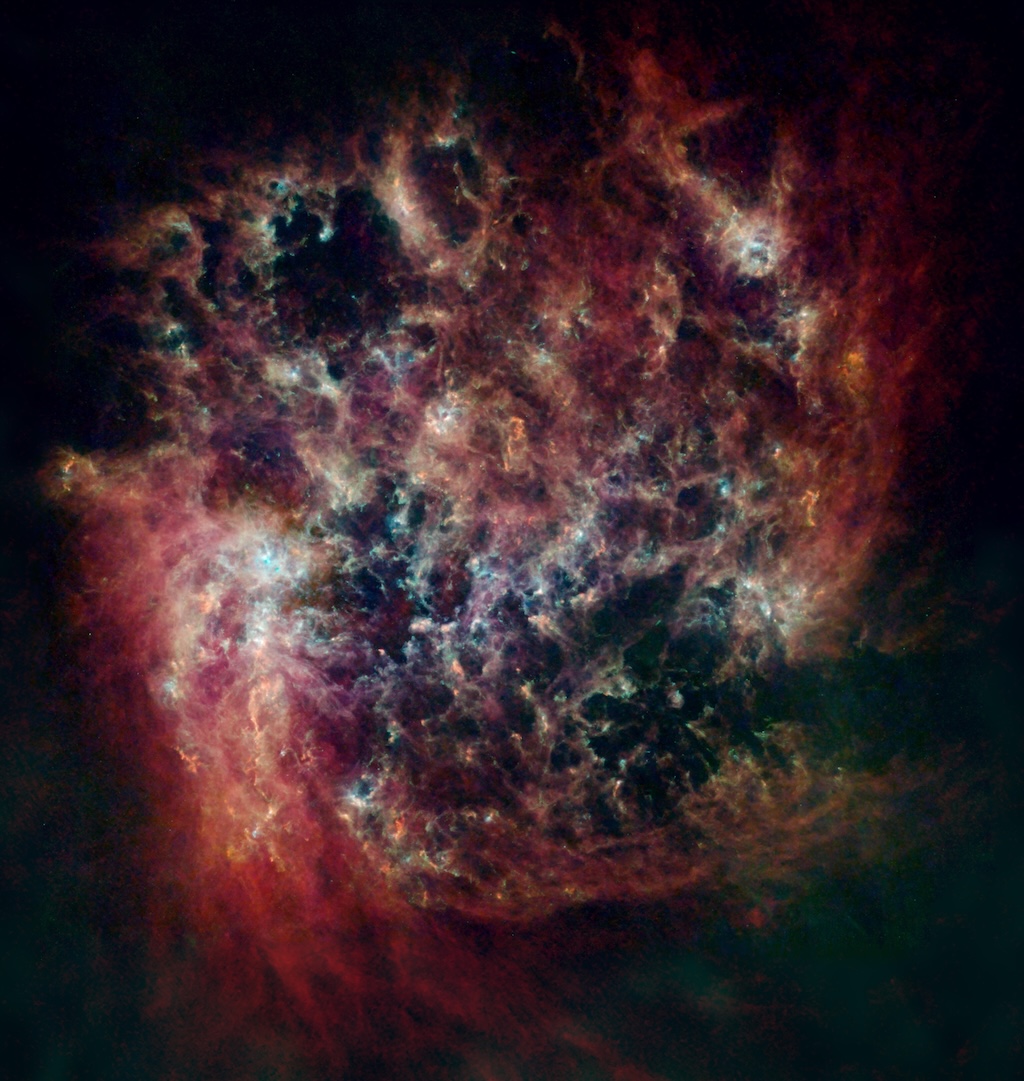
The Universe does not care that we arrange our scientific communities by density and by scale – material flows from the circumgalactic medium onto Galactic disks, from these disks into spiral structure and molecular clouds, and from the clouds to cores, proto-planetary disks, and finally stars. We know that the flow back from stars all the way back to extra-galactic scales, is critical to shaping the Universe we see today, and is the key regulator of galaxy and star formation. We know that the microphysics of cooling, grain physics, turbulence, and cosmic-ray diffusion has macroscopic impact on galactic accretion and molecular cloud formation. By bringing together experts on scales from the circumgalactic to the stellar, and giving them time and space to explain the questions, methods, and perspectives in their worlds, we aim to forge deeper connections and inspire game-changing innovation.
Fuse Theory & Data
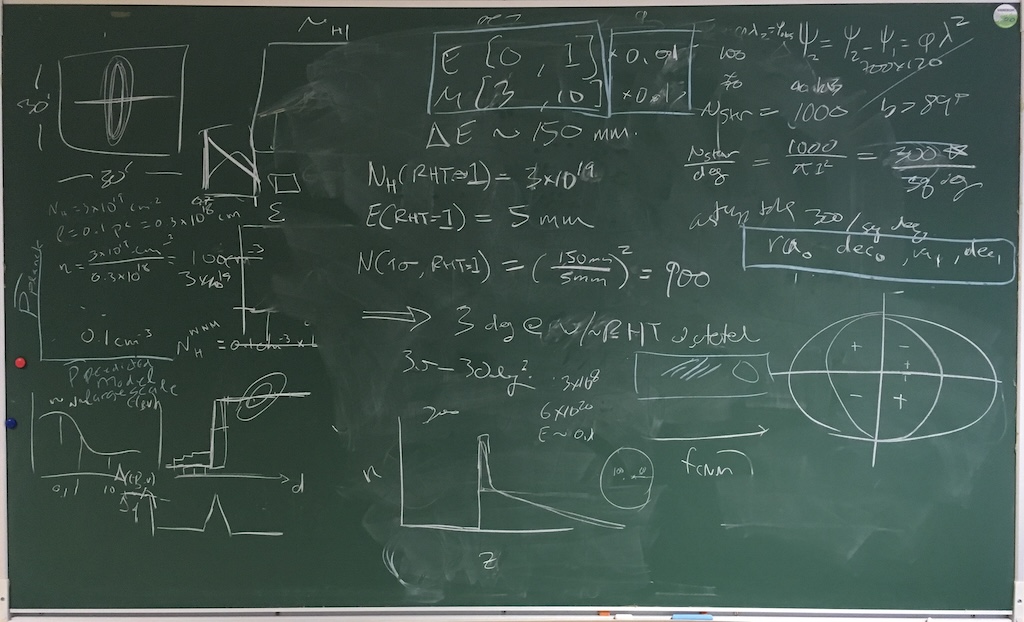
Many conferences and workshops provide an opportunity for theorists and data experts to present and discuss their different perspectives on the same topics. We have found that these attempts fall short; we nod thoughtfully at the other community’s presentations, but we do not deeply understand the conversation, the methods, the problems, and the subtleties. In some fields these problems are less acute, as the core points of comparison and interaction are well established. For example, in some parts of cosmology the data are highly reducible; theory and data can interface at shear fields, polarization maps, and high-z HI power spectra. In the ISM it remains fundamentally unclear how theoretical understanding should interface with the data. We do not know what structural and physical parameters of the ISM regulate the stellar-scale and galaxy-scale feedback and turbulence that shape our observable universe. We do not know where the statistical information from the ISM lies that will allow us to build the foreground maps that currently pose the fundamental limits to observational cosmology. By putting theorists and data experts side by side, day after day, year after year, in an intensive research environment we build the mutual trust, respect, and knowledge needed to forge the deeper connections that allow for breakthroughs in our understanding of the ISM.
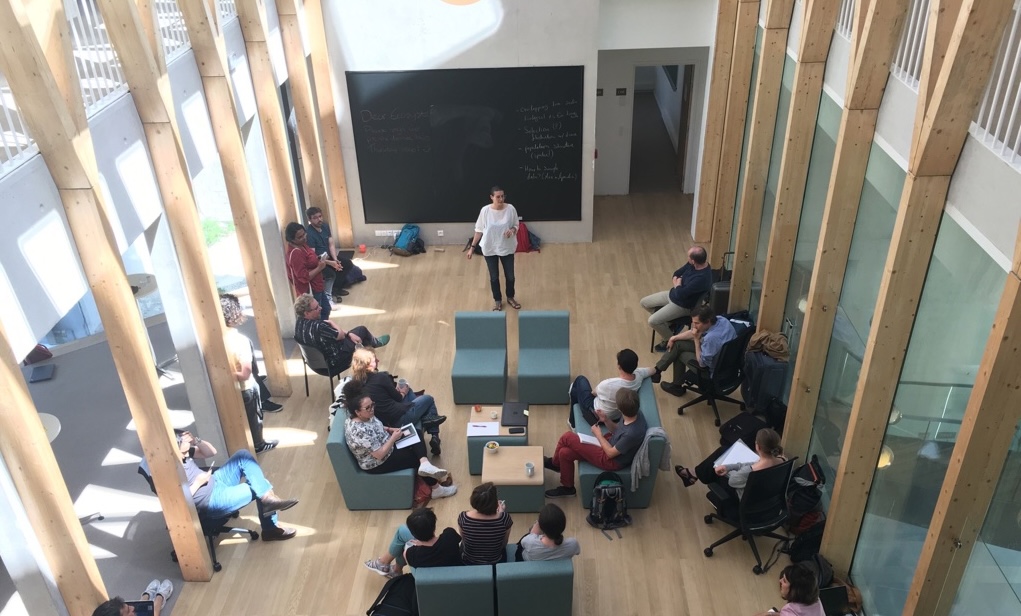
Intensive working sessions
The members of ii, along with visiting scientists, meet for 3 or 4 weeks each year at the Institut Pascal (IPa) in Orsay. The ~80 participants at every annual working session is composed of members of ii, complemented by a mix of visiting scientists and scientists from the larger ISM group of the Paris area. There are about 55 attendees at any one time. These intensive working sessions follow the structure of the IPa scientific program, with most of the time devoted to collaborative work. These are quite different from (e.g.) an Apsen Center for Physics program in that a group of people returns year after year, forming a committed, vibrant scientific core, and establishing the scientific trust so critical to the creation of new work. It is also quite different from a repeating international group meeting; in ii the returning scientists are not part of a single scientific project or experiment, and are often in disagreement about core concepts of the ISM. The ii is an open structure with many new people attending the program every year bringing new perspectives.